Introduction:
Dalvi R (2012)
- Surya Namaskar or Sun Salutations limbers up the whole body in preparation for the asanas.
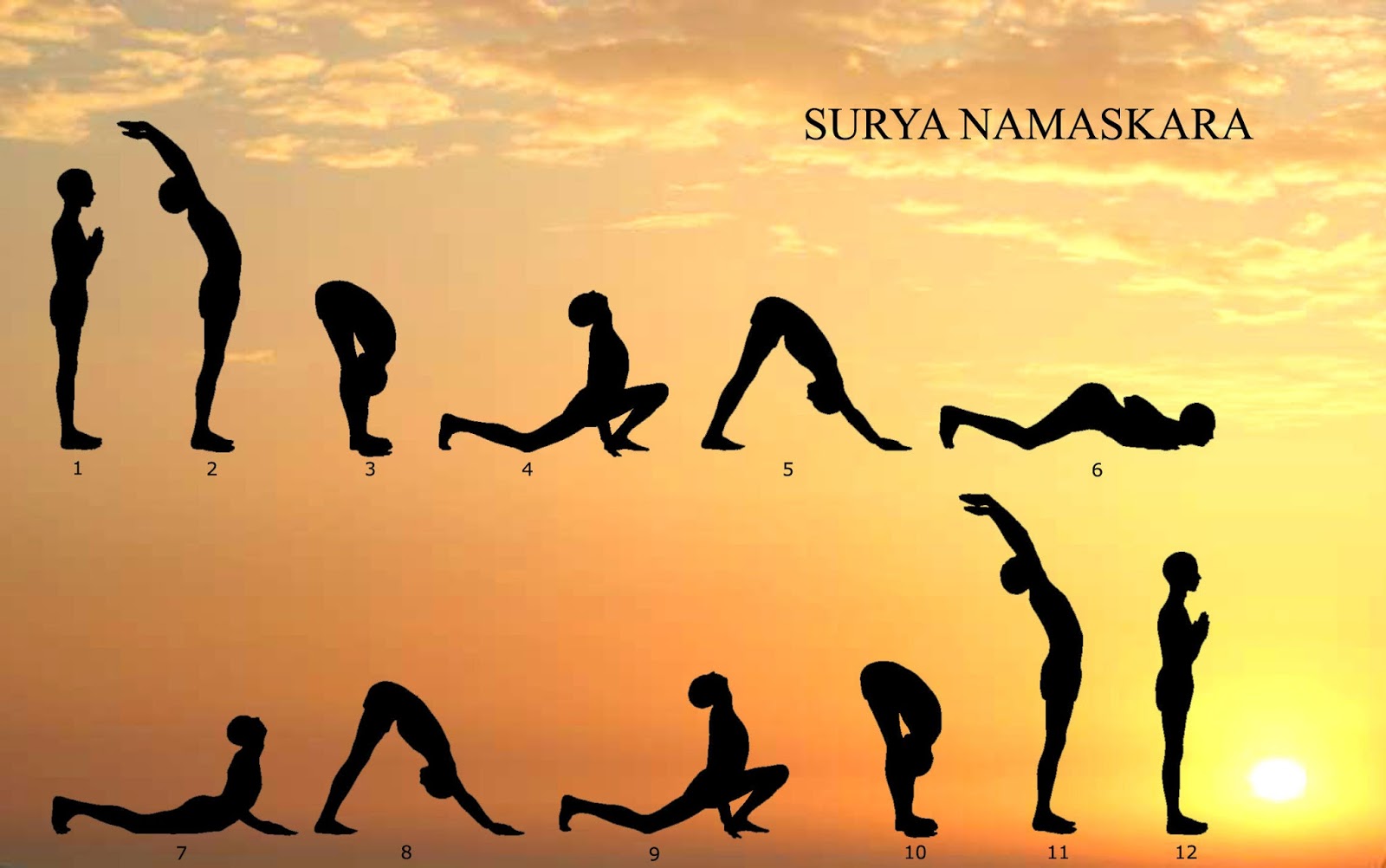
- It is a graceful sequence of twelve positions performed as one continuous exercise.
- Each position counteracts the one before, stretching the body in a different way and alternately expanding and contracting the chest to regulate the breathing.
- Surya Namaskar or Sun Salutation performed by Hindu worshippers to the Sun deity.
- Now it is practiced universally irrespective of the religion.
Dalvi R (2012)
Need for the Topic:
- The present generation is very cautious about their health
- But we occasionally freak out with our eating habits and are irregular in our fitness & exercise habits.
- The present market offers lots of health & fitness options like Going to Gym, aerobics classes, fitness club, jogging, using treadmill, crash weight loss program.
- These are time consuming &/ or expensive fitness options & may not be approachable, economic & available.
- Yoga, the traditional Indian exercise science, also offers many aspects of health & fitness which is been researched & utilized world over.
Suryanamaskar:
Suryanamaskar
is a complete exercise technique suiting most busy people of today.
It
is cheaper yet most effective & efficient means for exercise performance.The requirements/ resources required are minimal but results obtained are equally comparable to most other exercise regimes.
Shimpi A, Shetye J (2015)
Surya Namaskar is a combination of stretches and breath control. Traditionally there are 12 different poses to do in this. Each position counteracts the one before, stretching the body in a different way and alternately expanding and contracting the chest to regulate the breathing.
Seven important positions (aasanas) are beautifully combined in Suryanamaskar.
en.wikipedia.org/wiki/surya_namaskara
Surya Namaskar is a combination of stretches and breath control. Traditionally there are 12 different poses to do in this. Each position counteracts the one before, stretching the body in a different way and alternately expanding and contracting the chest to regulate the breathing.
Seven important positions (aasanas) are beautifully combined in Suryanamaskar.
en.wikipedia.org/wiki/surya_namaskara
Step
1. Pranam-asana (Salutation posture)

- Stand erect with feet together.
- Join the palms together in front of the chest.
- Concentrate on standing straight, steady and in a prayerful attitude. Exhale fully.
- This posture helps to induce a state of introversion, relaxation and calmness.
- Helps Control the sympathetic activity.
Step 2. Hasta-uttan-asana (Raised arm posture)

- Inhaling stretch both arms above the head, palms facing upward.
- Arch the back and stretch the whole body.
- This posture stretches the chest and the abdomen and lifts the COG upward to the upper parts of the body propelled by inhalation.
- Stretch of the ventral column and muscles of the body including abdominals, latissimus dorsi, hip flexors.
- Eccentric contraction
Step 3. Pada-hast-asana (Hand to foot posture)

- Exhaling bend the body forward and down, keeping the spine straight.
- Avoid collapsing the chest or "over-rounding" the upper back.
- Keep the legs straight and perpendicular to the ground. The knees may be allowed to bend a little if needed.
- This posture is good for the abdominal organs, especially the liver, kidneys, pancreas, adrenals, uterus and ovaries.
- The power of digestion increases and female disorders such as prolapse and menstrual irregularities are relieved.
- A healthy flow of blood is sent to the spinal nerves as they are stretched and toned.
- The hamstring muscles at the back of the thigh and calf muscles are stretched and toned. Stretching of Dorsolumbar fascia & Hamstrings
- Eccentric activation of back muscles.
- Inversion increases blood flow to the brain.
Step
4. Ashwa-sanchalan-asana (Equestrian posture)

- On the next inhalation, extend the left leg back and drop the knee to the ground.
- The right knee is bent and kept between the hands and the right foot placed flat on the ground. Weight bearing on upper limbs
- Partial lunge
- Lift the spine and open the chest. Concentrate at the eyebrow center. Stretch of the hip flexors of the rear limb.
- Useful for abdominal toning, improving function of digestion, pancreas, spleen & liver.
Step 5. Parvat-asana (Mountain posture)

- On the exhalation bring the right leg back to join with the left leg. Upper limbs & Foot weight bearing
- Simultaneously raise the buttocks and lower the head between the arms, so that the body forms a triangle with the floor and the Back is arched.
- Try to place the heels flat on the ground. Focus awareness at the neck area.
- This posture strengthens the nerves and muscles in the arms and legs, stretches the calf muscles and Achilles' tendons and makes the spine straight and taut.
- It relieves varicose veins and tones spinal nerves.
- Maintaining the posture take a deep inhalation.
Step 6. Ashtanga-Namaskara (Salutation with eight limbs)/ Dandasan

- Back arched.
- Exhaling gently drop both knees to the ground and slowly slide the body down at an angle as you bring the chest and chin to the ground.
- All eight limbs - toes, knees, chest, hands and chin - touch the floor. The buttocks are kept up.
- Hold the breath.
- This posture develops the chest and strengthens arms.
- It sends additional blood to this area helping to rejuvenate the nerves.
Step 7. Bhujang-asana (Cobra posture)

- On the inhalation, lower the hips while pushing the chest forward and upward with the hands, until the spine is fully arched and the head is facing up.
- The knees and lower abdomen remain above the floor.
- Focus the awareness at the base of spine and feel the tension from the forward pull.
- This pose gives dynamic expansion to the organs of the chest and abdomen, relieving many ailments such as asthma, constipation, indigestion, kidney and liver problems.
- It is very helpful in relieving tension in the back muscles and spinal nerves.
- Also helps in treatment of back ailments & upper limb strengthening.
Step 8. Parvat-asana (Mountain posture)
Exhale
and get back to Step 5.
Step 9. Ashwa-Sanchalan-asana (Equestrian posture)
Inhale
and swing the right leg forward between the hands. The left leg remains back.
Resume step 4.
Step
10. Pada-hast-asana (Hand to foot posture)
Exhaling,
bring the left foot forward. Join both legs and resume posture 3.
Step 11. Hasta-uttan-asana (Raised arm posture)
Inhale,
raise the trunk up and bend backward. Resume posture 2.
Step 12. Pranam-asana (Salutation posture)

Straighten
the body and bring the hands in front of the chest. Resume posture 1.
Benefits offered by Suryanamaskar:
1) Cardiac System:
- It is good for the heart and stimulates the cardiovascular system. It oxygenates the blood and helps strengthen the heart.
- It increases the circulation of whole body thereby acting as an excellent cardiac workout to enhance the blood circulation and warming up the body.
Jakhotia K, Shimpi A (2015), Mody BS (2011), Hagins M et al (2007), Sinha B (2004)
2) Musculoskeletal System:
- Expands the rib-cage, increases the capacity of lungs making the breath smooth and easy.
- Suryanamaskar is a complete exercise to all the muscles and joints of the body.
Nagani S, Shimpi A (AOP), Omkar SN (2011), Bhutkar MV (2011), Singh K (2010)
3) Neurological System:
- It increases concentration, memory, learning and focusing ability and vigilance.
- It strengthens the spine and abdominal muscle to control nervous system and activity of the internal organs.
Singh BB, Singh H (2012)
4) Metabolic System:
- Encourage the lymph drainage thereby increasing the immunity and resistance of the body.
- Tones all the muscles of the body and reduces fat thereby helping to control obesity and metabolism of the body.
- Activates the glands and regulates the hormone.
Nagani S, Shimpi A (AOP), Jakhotia K, Shimpi A (2015), Mody BS (2011), Bhutkar MV (2011)
5) Other Believed Benefits:
- Suryanamaskar is good for the digestive system and the nervous system. It stimulates the lymphatic system and supports respiratory system health, as well.
- Suryanamaskar is an excellent alternative to caffeine and other stimulants. If you suffer from insomnia or sleep disturbances, you will find practicing Suryanamaskar aids in helping you fall asleep without the need for depressants.
- It is relaxing and rejuvenating, and tension, stress and anxiety melt away as you perform Surya Namaskar.
- Suryanamaskar practice stimulates and conditions virtually every system in the body.
- Suryanamaskar energizes the entire metabolic and neuromuscular system of the body and its regular practice ensures a balanced supply of oxygenated blood and perfect harmony to all the systems of the body thus involves the entire psychosomatic system of human constitution.
Precautions & Contraindications:
- Pregnant women should not practice this after third month of pregnancy.
- Patients of Hernia and high blood pressure are warned against this practice.
- People suffering from back conditions should seek proper advice before commencing Surya Namaskar.
- Women should avoid Surya Namaskar during menses.
Why a Community Based Complete Exercise?
- Suryanamaskar is amongst the cheapest yet most efficient & reliable components of exercise performance in the society.
- It is an efficient training & weight loss tool as it acutely targets the cardio-respiratory & metabolic system in the body.
- Regular practice of Surya Namaskar may maintain or improve cardio-respiratory fitness, as well as promote weight management.
Mody
BS. (2011), Shimpi A,
Shetye J (2015), Jakhotia K, Shimpi
A
(2015)
- Suryanamaskar also can improve cognitive functions such as remote memory, mental balance, attention and concentration, delayed and immediate recall, verbal retention and recognition tests.
Chattha R,
Nagarathna R
(2008), Singh BB (2012)
- During performance of Suryanamaskar, metabolic costs averaged across the entire session represent low levels of physical activity, which are similar to walking on a treadmill at 3.2 kph.
- Its regular practice incorporating the different postures exceeding the minimum bout of 10 minutes may contribute some portion of sufficiently intense physical activity to improve cardio-respiratory fitness in unfit or sedentary individuals.
Hagins M
(2007)
Physical Fitness:
- Suryanamaskar is an ideal aerobic exercise as it involves both static stretching and slow dynamic component of exercise with optimal stress on the cardio-respiratory system.
Sinha B,
Ray US (2004)
- Children practicing Suryanamaskar as a regular physical activity had a better level of aerobic capacity, better muscular strength, endurance and flexibility.
Nagani S,
Shimpi A
(AOP)
Orthopedic Problems:
- It provides dynamic moments with high magnitudes and rates, applied with unusual distribution patterns, optimal for osteogenesis.
- Also, the joints are subjected to submaximal loadings thus ensuring that none of the joints are overstressed.
Omkar
SN, Mour M
(2011)
Dose:
Performing
24 cycles of Suryanamaskar, 6 days a week can be an ideal exercise to keep
oneself in optimum level of fitness by improving strength, endurance & body
composition.
Bhutkar
MV, Bhutkar PM
(2011)
Conversely,
RPE can also be used to calculate the exercise intensity, as per ACSM
guidelines. An exercise intensity of 6 to 7 of 10 for 4-5 days per week for 6 –
8 weeks can be adequate for fitness enhancement.
Shimpi
A,
Shetye J (2015), Jakhotia K, Shimpi
A
(2015)
Speed:
There
exists differences between Suryanamaskar training when performed in a slow and
fast manner.
The
effects of Fast Suryanamaskar are similar to physical aerobic exercises,
whereas the effects of slow Suryanamaskar are similar to those of yoga
training.
Bhavanani
AB, Udupa K
(2011)
Is Suryanamaskar only for Normal Healthy People?
Singh S, Malhotra V (2005)
Weight Management and Fitness:
Jakhotia K, Shimpi A (2015), Nagani S, Shimpi A (AOP), Sinha B (2013), Bhutkar MV (2011), Mody BS (2011), Hagins M (2007)
Spine and Knee Problems in Old Age:
Jakhotia K, Shimpi A (2015)
How Community Based Activity?:
- Studies done in NIDDM patients showed that patients performing suryanamaskar showed a significant decrease in waist-hip ratio and changes in insulin levels, suggesting a positive effect of suryanamaskar on glucose utilisation and fat redistribution in NIDDM.
- The authors suggested that Suryanamaskar may be used as an adjunct with diet and drugs in the management of Type 2 diabetes.
- Studies also showed that NIDDM patients performing suryanamaskar felt better and were relieved of their stresses and had an improvement in their day to day performance.
Singh S, Malhotra V (2005)
Weight Management and Fitness:
- With modifications & under appropriate guidance, Suryanamaskar can be done by patients with Orthopedic ailments, Cardiorespitatory disorders & Metabolic disorders to get a maximal beneficial results.
- Suryanamaskar training is an effective tool in weight management and improvisation of physical fitness parameters in over weight and obese people, especially in improving Cardio- respiratory fitness, upper limb muscle endurance and body flexibility.
Jakhotia K, Shimpi A (2015), Nagani S, Shimpi A (AOP), Sinha B (2013), Bhutkar MV (2011), Mody BS (2011), Hagins M (2007)
Spine and Knee Problems in Old Age:
- Modifications can be done for patients with Back problems, Obesity, Knee Arthritis, Neck Problems by raising surface height during Padahastasana to prevent excess back, knee movement e.g. by using a chair or bed.
- This also prevents excess knee flexion during ashwa sanchalanasana.
Jakhotia K, Shimpi A (2015)
How Community Based Activity?:
- Group Activity
- Suryanamaskar Clubs / Groups
- Support Groups for various diseases – Suryanamaskar Hubs
- Promotional activities in Schools (Competitions), (Health time instead of overtime)
- Senior Citizens Suryanamaskar Clubs
Coming Together for Exercise; Coming together by Suryanamaskar:

References:
On request.
