Showing posts with label Sun Salutation. Show all posts

Monday, 15 February 2016

My Louisville-age Fellowship in Physiotherapy Pilgrimage: An unusual realization

With my US mentor, Dr. John Nyland, 
Director of Athletic Training Program, Spalding University, 
President of Board of Directors, JOSPT

Someone has rightly said that we all are students for our whole life and that life itself is the best teacher. And what a wonderful teacher life really is! It gives us multiple opportunities to learn, grow and progress with all its unique and practical based experiences.

It has been 12 years now that I am facilitating Physiotherapy education at this wonderful institute. And these 12 years too have been unique learning experiences from seniors, colleagues and students alike. But one of my wonderful learning opportunities was recently presented to me when I got to do my fellowship in Physiotherapy in the US. But the process for this had already started more than 2 years back when my boss and mentor Dr. Parag Sancheti had invited Dr. John Nyland for a Continuous Physiotherapy Education (CPE) session right here at Sancheti Institute College of Physiotherapy around in 2013 when even I had an opportunity to take a session on Virtual Reality Training in Sports. Our interaction and the constant support by Dr. Parag finally led to the invitation by Dr. Nyland for my visit to the US for an advanced learning experience in Orthopedics and Sports Physical Therapy.
Kosair Charities College of Health and Natural Sciences, 
Spalding University, Louisville, KY, USA

But this, by itself, was not an easy step as my pre-preparation included multiple short certificate exams on HIPAA, Blood – borne pathogens, Fire safety, workplace emergencies etc. Also the tests and shots of Influenza, Montoux, MMR, and DPT were just amazingly painful. Not to mention that previous passport expired in Feb 2015 and I woke up only in July 2015 to get new passport issues. Fortunately (and surprisingly) the US visa issuance turned out as the quickest and hassle-free process. Well, everything seemed to be finally set. My fellowship dates were from 18th October to 7th November 2015, a whole 3 weeks. But going to US on tourist visa and no tour? That’s when the Niagara Falls trip just dropped in like a bomb. But hey, we aren’t talking about the Niagara and the helicopter ride and the awesome wonderful experience. Right now, it’s purely my fellowship!!
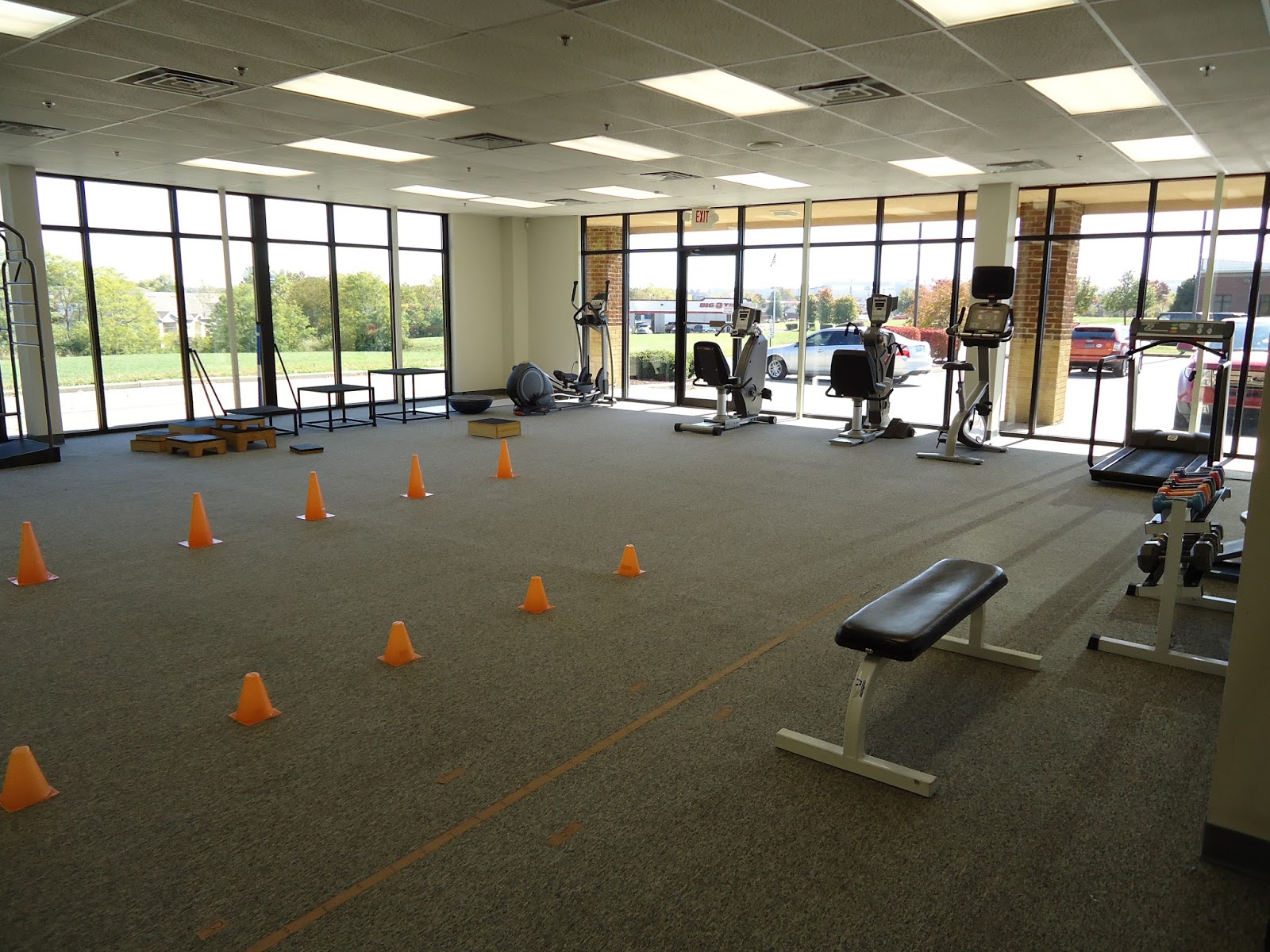


Orthopedic and Sports Physical Therapy, Louisville, KY


Advanced Orthopedic Physical Therapy, Louisville, KY

So finally I took off to look forth for a wonderful 3 weeks’ vacation (oops), 3 weeks of enhanced learning experience on 17th Oct from Mumbai to reach Louisville. Dr. Nyland was extremely gracious to receive me on the airport. My learning started immediately from the next day and continued for the next 2 weeks. I got a chance to learn and observe eminent physical therapists like Dr. Bradley Wheeldon and Dr. Alex Kent from specialty clinics like the Orthopedics and Sports Physical Therapy, Dr. Julie Snowden, Dr. Robin McNeill and Dr. Katie Elder at the Advanced Orthopedics Physical Therapy and Dr. Janelle Caudill at the Kentucky Orthopedics Rehabilitation Team clinics. The purpose of the visit was not only to learn the advances in orthopedics and sports physical therapy but also to learn the aspects of PT department functioning, administrative responsibilities and to understand their perspective and rationale of Patient treatment approach and working on the needs and necessities of the PT department functioning. 


Kentucky Orthopedics Rehabilitation Team, Louisville, KY

My clinical learning also included 2 days each with Dr. David Caborn who is a Knee and Foot Surgeon at Kentucky One Health Jewish Hospital and with Dr. Ryan Krupp who is a Shoulder surgeon at Norton Brownsboro Hospital. And last but not the least, got to see Dr. John Nyland in action at his Return to Sports clinic at Spalding University as well as assist him in Inter-university Soccer matches for Men and women. 


Dr. Nyland Return to Sports Clinic, Spalding University


Inter-University Soccer Matches

My visit also comprised of giving an interactive lecture to the DPT students at Bellarmine University and to the MSAT students at Spalding University on my favorite topic of ‘Using Suryanamaskar (Sun-Salutation) as a Yogic way for a Community Based Exercise Program – A Physical Therapists Perspective’ which was a chance to represent my Institute, University, Culture and finally my Country and was highly appreciated by the students and the faculties at both the Universities.

Lecture on Suryanamaskar (Sun Salutation)

Practical Demo of Suryanamaskar with students and Faculty of Spalding

With Dr. Patricia Gillette, School of Physical Therapy, 
Bellarmine University, Louisville, KY, USA

Many of my friends and my colleagues have asked me about the different or new things I got to learn over there. Well, to start with, I would say that Physical Therapy education in India is in every way equivalent in standards to that in the US. Infact, our current education system has 4 years of Bachelors and 2-3 years of Masters Program in Physical Therapy while US has a general bachelors program and directly a 3 years DPT program. Ofcourse every education system has their own pros and cons and I definitely am not criticizing any one of it. What I feel is that we need to make special efforts at individual level to learn the best of every system. Even in India, we are very active in clinical research which will help our profession progress and grow. But we all yet need to take research publications more seriously. One basic learning part would be the multi-planar motions training, sports specific rehabilitation and the advanced functional rehabilitation concepts which I learned over there, probably due to the increased demands of their clients for a faster rehab to meet and match their active sports specific lifestyle. Also got to learn the utilisation and applicability of some different equipments like the 'Game-ready' and the 'Hivamat' which we typically do not use over here.
Game Ready Cryo Compress Packs

Hivamat Stimulator


But what I really liked and learned over there is their attitude and positivity. During my visits to the clinics or my lectures in Bellarmine and Spalding, I had asked Dr. Nyland about what were their expectations from me. His answer was simple. He just said, “Apurv, I want you to enjoy there. If you enjoy, people around you will enjoy and only then will you and others work more productively.” I was in love with this statement of his. We all are so much used to work under pressures that we know how to perform, but not how to excel. There, people laugh, play, joke and enjoy in their work also. This helps in creating a bonding between associates as well as your start liking what you do. Infact people want to be at work as it is not a place of stress, but a place to live your life too. (I am sure we know that US is amongst the most productive country in the world). 


Second, have a family life as well. We tend to work for our family and on this pretext get so much busy in that process that we don’t have any time left for our family. The next best thing I learned over there is their support system. Everyone has their own set of tasks and duties. But everyone is always eager and supportive towards their colleagues as well. This helps in building an extremely good team character and also facilitates a positive environment. We Indians are definitely extremely hardworking and intelligent breed of people and have the potential of exceeding in every aspect. I am sure, some change in our behavior and approach will get us far ahead. And it isn’t difficult either. Keeping the roads and our environment clean, following traffic laws and rules, loving and respecting others also is not so difficult. 

And most important what I learned is how to value people. Everyone around made me feel extremely special and cared for. Even in the public transport systems, hotel, and especially in the clinics I visited. We say “Atithi Deva Bhava” (Guests are Gods). I experienced it there. Ofcourse, staying away from my family for 3 weeks was painful. But I found another family over there in all the friends that I made. And that is how finally culminated my “Louisville Combined-Service Orthopaedic Surgery and Physiotherapy Fellowship”

Saturday, 20 June 2015

Role of Hasya Yog (Laughter Therapy) Clubs in Promotion of Health in Community


Summary:
Health promotion covers all aspects of those activities that seek to improve the health status of individuals and communities. Many studies have proved that laughter has both, short term and long term benefits on our physical, mental and emotional health. Our purpose was to assess role of Hasya Yog' in promotion of health in the community. 400 people, of which 200 participated in Hasya Yog, were assessed on the basis of three parameters; respiratory function assessed by peak expiratory pressure and maximal inspiratory pressure, flexibility measured by using a sit and reach test and quality of life was assessed by SF 36 questionnaire. Results were obtained using 'unpaired t test' and ‘Mann Whitney Test’ for comparing the parameters. A significant difference was found while comparing respiratory function using PEFR and PI max (p<0.001). Flexibility test was also statistically significant (p < 0.01). In case of quality of life physical health component was better in Hasya Yog members group whereas, mental health component was not found to be statistically significant. (p=0.24). Thus, Hasya Yog (Laughter clubs) definitely plays a major role in promotion of health in the community, with respect to Respiratory function, flexibility and quality of life (physical component). However, we found its limited role in influencing the mental component of quality of life.


Hasya Yog:
21st of June 2015 is being celebrated as International Yog Day. The World health organization (WHO) defines health as a state of complete physical, mental and social wellbeing, and not merely an absence of disease or infirmity. Health promotion is a part of primordial and primary approaches of health care delivery system. It is the process of empowering people to make healthy lifestyle choices and improve the quality of life. An article ‘Health Promotion by Social Cognitive Means’ by Albert Bandura, examines health promotion and disease prevention from the perspective of social cognitive theory. Active community participation is crucial for any health promotion process to be successful.


India is considered as the birth place of the Yog concept which has now got a global recognition. Yog does not only help in developing the physical functioning and health, but has also been proved to be extremely efficient in improvising the mental and cognitive functions across all ages. In India, increase in self-help clubs and voluntary organizations have also developed to encourage this. Janet Patford and Helen Breen suggested that clubs attract older people by offering diverse activities. Hasya Yog Mandal or “Laughter club” is one such social activity started more than 13 years back. World Laughter Day was celebrated recently on 3rd May. Joel Goodman said, “Seven days without laughter makes one weak” and yes, laughing matters. An observational research done by Colin Greaves proved that in 12 months, there were significant improvements in depression and social support and marginally significant improvement in Short Form 12 physical component in geriatric participants engaging in programs of creative exercise and/or cultural activities with an emphasis on social interaction. Tan SA, Tan LG et al proved that humour appears to attenuate catecholamines and myocardial infarction (MI) recurrence and thus may be an effective adjunct in post cardiac arrest care. Laughter has physiological, psychological, social and spiritual benefits and also benefits in enhancing the quality of life with hardly any adverse effects. Also practically there are no contraindications of laughter. Therapeutic efficacy of laughter is mainly derived from spontaneous laughter (triggered by external stimuli or positive emotions) and self-induced laughter (triggered by oneself at will). However, the medical literature contains little on humour, and very little research has been conducted on this common aspect of human communication. Although individual reviews and opinions are published regarding therapeutic use of laughter an organized study on laughter is not reported. Our study assessed the effect of these Hasya Yog mandals in promotion of health of the subjects by indirectly assessing physical fitness components and quality of life in the community dwelling elderly individuals.


We performed a cross sectional survey in 2009-2010 in Pune city on 400 elderly people of whom 200 subjects were regularly attending the laughter club activities with at least 80% attendance while other 200 did not participate in any other physical fitness activities except leisure walking and were selected from the similar population as the Hasya Yog mandal members. Informed consent was taken from all the subjects for their willingness to participate in the survey which was approved by the local ethical committee. Outcome measures that were used for assessing quality of life was the Short form 36 scale (SF36), for assessing flexibility, the modified sit and reach test, for assessing respiratory function the Peak Expiratory Flow Rate (PEFR) by Mini Wright’s peak flow meter and maximum inspiratory pressure (PI max) by pressure gauge instrument. These measurements were taken in a comfortably sitting position for each subject and best of three readings was taken. Sit and reach test was carried out for each subject after a prior warm up and mild stretching. Test was done using a ruler and a marker as per feasibility. Any subject showing symptoms of back pain while performing this test was excluded from the study. Quality of Life (QoL) was measured by the SF-36 scale. The procedure of filling the scale was explained and doubts, if any, were solved. However, this definitely depended on the intelligence and understanding of the subjects which was not under our control. Completed forms were collected from the members. Comparison between two groups on the basis of respiratory function, flexibility and quality of life was done using 'unpaired t test' for comparing respiratory function and flexibility parameters and ‘Mann Whitney Test’ for QoL with alpha set at p<0.05.


Table 1: Demographic Data:
Variable
Laughter club group
Non Laughter group
Samples
200
(Males 59, Females 121)
Excluded 20
200
(Males 52, Females 108)
Excluded 40
Age (in yrs)
62.88 ± 8.24 (Mean ± SD)
(n=180)
60.66 ± 7.84 (Mean ± SD)
(n=160)

EXCLUDED DATA SUBJECTS
Number
Smokers
08
Structural Back Problems (Prolapsed Intervertebral Disc, Lysthesis etc.)
09
Obstructive / Restrictive Lung Pathology
06
Taking Antidepressants / Anxiolytics
05
Additionally Participating in Yoga / Health Clubs
14
Incomplete filled Forms
05
Inability To Perform Tests
13
TOTAL
60

Table 2: Comparison between both the groups on the basis of respiratory function, flexibility and quality of life.
Variable
Laughter club group (mean ± SD)
Non Laughter group (Mean ± SD)
p Value

PEFR (Lt/ min)
278.58 ± 75.5
239 ± 78
< 0.05
Pi Max (cms H2O)
75.21 ± 44.58
57.3 ± 32.9
< 0.05
Flexibility (cms)
30.4 ± 9.375
27.74 ± 9.733
= 0.01
Physical Function
87.5 ± 13.8
79.84 ± 19.95
< 0.05
Role Physical
83.34 ± 19.37
79.76 ± 21.8
< 0.05
Bodily Pain
79.08 ± 19.91
66.24 ± 24.54
< 0.05
General Health Perceptions
75.77 ± 18.09
68.03 ± 27.85
< 0.05
Role Emotional
84.82 ± 21.6498
78.2 ± 21.75
= 0.24
Vitality
81.61 ± 19.58
68.75 ± 25.25
= 0.24
Mental Health
83.06 ± 15.6
77.15 ± 22.53
= 0.24
Social Function
96.1 ± 10.25
95.51 ± 9.0361
= 0.24
Physical Component
Summary
81.43 ± 11.79
73.46 ± 14.85
< 0.05
Mental Component Summary
86.4274 ± 11.4413
79.903 ± 12.50
= 0.24

The values obtained and analysed showed a significant difference (p<0.001) between peak expiratory flow rate, maximal inspiratory pressure, flexibility by sit-and-reach test, physical QoL and physical QoL components between both the group. Difference between scores of mental QoL and mental QoL components scale were not found to be significant (p>0.001).

How Does Laughter (Hasya Yog) Help Us?
Impact of laughter on general well-being of patients is been described, however an organized controlled study in laughter clubs is not been done. The function of respiratory system depends on many factors out of which important ones are the central nervous system with the neural pathways and the muscles of respiration and chest wall. The lungs are not capable of inflating themselves. The force for this inflation must be supplied by the muscles of respiration. Respiratory function was taken as a surrogate measure for physical functions. It was judged by two parameters: PEFR and PI max. These are the indicators of expiratory and inspiratory function respectively. Hasya Yog members demonstrated a significant difference in both. Hence, their respiratory function was better than the non-participants in laughter group. However, low PEFR and PI max scores might also be due to the subclinical conditions which were not assessed by us. The above obtained result is supported by research findings which proved that respiratory system is coordinated in a rather precise way with laryngeal activity during a laugh. Phasic respiratory efforts are present during laughter. Laughter involves deep inspiration followed by forceful exhalation. Due to increased respiratory muscle strength by regular laughter therapy, indirectly we must have got good scores of PEFR and PI max. Flexibility training is an integral part of the laughter club protocol wherein stretching exercises are been given to all the members of laughing for initial 10 minutes.


Muscles shorten and lose elasticity, due to increased cross linking between collagen tissues that occurs with normal aging process. In our study flexibility of hamstrings and back was assessed by sit and reach test and was found to be good in Hasya Yog members. This improved flexibility may in turn reduce the chances of having any further musculoskeletal ailments, pains, gait limitation and risks of falling. This was reflected in our study by better physical quality of life score in this group. Cunha et al too found that stretching exercises were effective in reducing pain and improving range of motion and quality of life in female patients with chronic neck pain. Stretching adds to functional fitness, helping to stay agile and independent as long as possible, improving general health. Static stretching is preferred to create long lasting lengthening of muscles and surrounding tissue. It is a safe and well tolerated form of stretching. This might be the reason why static stretching techniques practiced in laughter clubs were beneficial.


Physical activity improves patients’ ability to perform tasks and patient’s perception of impact of disability on their physical functioning. There was significant difference in the physical component summery (PCS) scores between Hasya Yog group and other group. PCS includes four components physical functioning (PF), role limitation due to physical health problems (RP), bodily pain (BP) and general health perception (GP). Hasya Yog group showed higher mean scores for all and reported less limitation in doing activities of daily living (ADLs) like carrying household stuff, stair climbing, walking etc. All exercises of laughter club help in performing activities more efficiently. Whereas; people in non-laughter group and having sedentary life style leads to reduction in their physical abilities due to disuse. In the laughter group, we got significantly low score for pain. This is supported by the research which showed that laughter and distraction both increased the pain tolerance by causing release of endorphins which are natural pain suppressors. Their general health perception reported was also good. This is supported by research article published in American medical association’s journal, which conclude that “A humour therapy program can increase the quality of life for patients with chronic problems and that laughter has an immediate symptom-relieving effect for these patients, an effect that is potentiated when laughter is induced regularly over a period.” Series of researches did by Dr. Lee Berk and colleague put forth the fact that laughter therapy increases level of activated T cell, antibodies IgA, gamma interferon, IgB which ultimately increases the immunity. A lot of interaction between peers facing similar problems might help them to cope with the diseases better and increase the self-confidence. This might be reflected in the results as, experimental group showed positive perception about their health.


Mean score for quality of life (mental component) in the laughter group was higher as compared to the other group. However, statistical comparision did not show a significant difference as p = 0.24. Mental component summary is calculated using four components of SF-36 scale; role limitation due to emotional health problems (RE), mental health (MH), vitality (VT) and social functioning (SF). Laughter club members showed higher scores on first three parameters. Scores for social functioning was found to be similar for both the groups. It is also subjective and equally dependent upon the interpretations and perceptions of the individual. This could be the reason why laughter club activities might not be having a significant role in influencing mental health of an individual. Research indicates that interventions, which promote active social contact, which encourage creativity, and which use mentoring, are more likely to positively affect health and well-being. Clubs provide a forum where people can meet, talk, and receive social acknowledgement on a regular basis. They thus help to foster a sense of connectedness and may reduce the loneliness that older people often experience as a result of retirement, bereavement, and children moving away. Laughter works as a safety valve that diffuses tension, reduces stress related hormones like epinephrine, cortisol etc. and aids in relaxation. In our study, the Hasya Yog group showed a positive response to questions about feeling calm and peaceful which is also supported by a recent study indicating that laughter resulted in H-reflex suppression. Both laughter and simulated laughter decreased spinal motor excitability causing muscle relaxation and reducing stress. People who are engaged in any of the social activities get an opportunity to share their emotions, might feel the intensity of such problems less as compared to others who are socially isolated. Thus, summing all the researches and results observed in our study, we can conclude that participation in a regular exercise program and engaging in social activities as in laughter clubs is an effective intervention.

Thus, we concluded that Hasya Yog (Laughter therapy) definitely play a major role in promotion of health in community with respect to respiratory function, flexibility and quality of life (physical component). However, its role was found to be limited in influencing the mental component of quality of life.


We would like to thank all the participants who participated in the study with co-operation and enthusiasm.
Dr. Nishigandha R Supekar (PT)
Dr. Apurv P Shimpi (PT)
Dr. Alopa V Madane (PT)


The above study has been published in the Indian Journal of Physiotherapy & Occupational Therapy, April-June 2014, Vol. 8, Issue. 2; Page 110-114