Showing posts with label science. Show all posts

Monday, 15 February 2016

My Louisville-age Fellowship in Physiotherapy Pilgrimage: An unusual realization

With my US mentor, Dr. John Nyland, 
Director of Athletic Training Program, Spalding University, 
President of Board of Directors, JOSPT

Someone has rightly said that we all are students for our whole life and that life itself is the best teacher. And what a wonderful teacher life really is! It gives us multiple opportunities to learn, grow and progress with all its unique and practical based experiences.

It has been 12 years now that I am facilitating Physiotherapy education at this wonderful institute. And these 12 years too have been unique learning experiences from seniors, colleagues and students alike. But one of my wonderful learning opportunities was recently presented to me when I got to do my fellowship in Physiotherapy in the US. But the process for this had already started more than 2 years back when my boss and mentor Dr. Parag Sancheti had invited Dr. John Nyland for a Continuous Physiotherapy Education (CPE) session right here at Sancheti Institute College of Physiotherapy around in 2013 when even I had an opportunity to take a session on Virtual Reality Training in Sports. Our interaction and the constant support by Dr. Parag finally led to the invitation by Dr. Nyland for my visit to the US for an advanced learning experience in Orthopedics and Sports Physical Therapy.
Kosair Charities College of Health and Natural Sciences, 
Spalding University, Louisville, KY, USA

But this, by itself, was not an easy step as my pre-preparation included multiple short certificate exams on HIPAA, Blood – borne pathogens, Fire safety, workplace emergencies etc. Also the tests and shots of Influenza, Montoux, MMR, and DPT were just amazingly painful. Not to mention that previous passport expired in Feb 2015 and I woke up only in July 2015 to get new passport issues. Fortunately (and surprisingly) the US visa issuance turned out as the quickest and hassle-free process. Well, everything seemed to be finally set. My fellowship dates were from 18th October to 7th November 2015, a whole 3 weeks. But going to US on tourist visa and no tour? That’s when the Niagara Falls trip just dropped in like a bomb. But hey, we aren’t talking about the Niagara and the helicopter ride and the awesome wonderful experience. Right now, it’s purely my fellowship!!
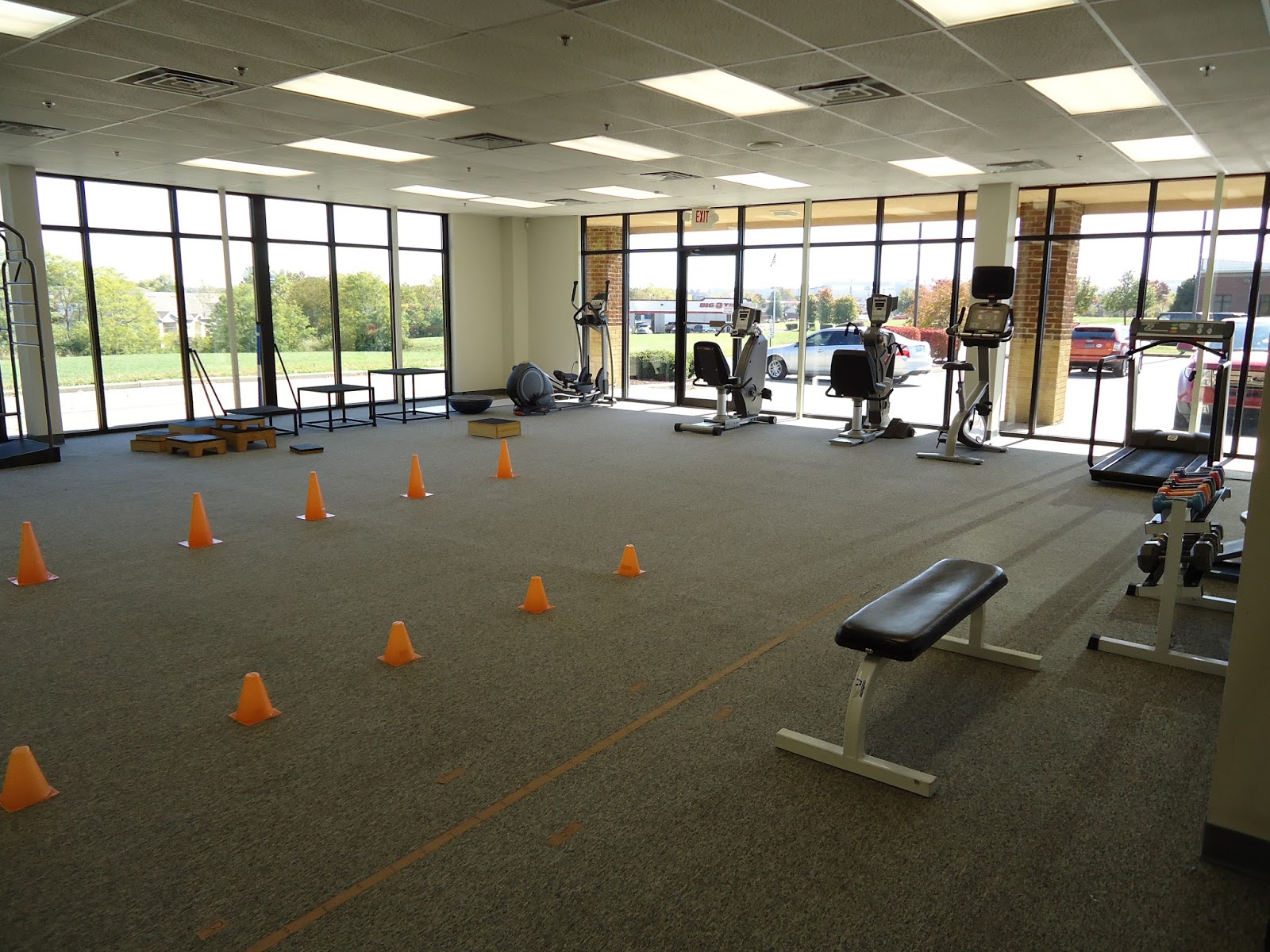


Orthopedic and Sports Physical Therapy, Louisville, KY


Advanced Orthopedic Physical Therapy, Louisville, KY

So finally I took off to look forth for a wonderful 3 weeks’ vacation (oops), 3 weeks of enhanced learning experience on 17th Oct from Mumbai to reach Louisville. Dr. Nyland was extremely gracious to receive me on the airport. My learning started immediately from the next day and continued for the next 2 weeks. I got a chance to learn and observe eminent physical therapists like Dr. Bradley Wheeldon and Dr. Alex Kent from specialty clinics like the Orthopedics and Sports Physical Therapy, Dr. Julie Snowden, Dr. Robin McNeill and Dr. Katie Elder at the Advanced Orthopedics Physical Therapy and Dr. Janelle Caudill at the Kentucky Orthopedics Rehabilitation Team clinics. The purpose of the visit was not only to learn the advances in orthopedics and sports physical therapy but also to learn the aspects of PT department functioning, administrative responsibilities and to understand their perspective and rationale of Patient treatment approach and working on the needs and necessities of the PT department functioning. 


Kentucky Orthopedics Rehabilitation Team, Louisville, KY

My clinical learning also included 2 days each with Dr. David Caborn who is a Knee and Foot Surgeon at Kentucky One Health Jewish Hospital and with Dr. Ryan Krupp who is a Shoulder surgeon at Norton Brownsboro Hospital. And last but not the least, got to see Dr. John Nyland in action at his Return to Sports clinic at Spalding University as well as assist him in Inter-university Soccer matches for Men and women. 


Dr. Nyland Return to Sports Clinic, Spalding University


Inter-University Soccer Matches

My visit also comprised of giving an interactive lecture to the DPT students at Bellarmine University and to the MSAT students at Spalding University on my favorite topic of ‘Using Suryanamaskar (Sun-Salutation) as a Yogic way for a Community Based Exercise Program – A Physical Therapists Perspective’ which was a chance to represent my Institute, University, Culture and finally my Country and was highly appreciated by the students and the faculties at both the Universities.

Lecture on Suryanamaskar (Sun Salutation)

Practical Demo of Suryanamaskar with students and Faculty of Spalding

With Dr. Patricia Gillette, School of Physical Therapy, 
Bellarmine University, Louisville, KY, USA

Many of my friends and my colleagues have asked me about the different or new things I got to learn over there. Well, to start with, I would say that Physical Therapy education in India is in every way equivalent in standards to that in the US. Infact, our current education system has 4 years of Bachelors and 2-3 years of Masters Program in Physical Therapy while US has a general bachelors program and directly a 3 years DPT program. Ofcourse every education system has their own pros and cons and I definitely am not criticizing any one of it. What I feel is that we need to make special efforts at individual level to learn the best of every system. Even in India, we are very active in clinical research which will help our profession progress and grow. But we all yet need to take research publications more seriously. One basic learning part would be the multi-planar motions training, sports specific rehabilitation and the advanced functional rehabilitation concepts which I learned over there, probably due to the increased demands of their clients for a faster rehab to meet and match their active sports specific lifestyle. Also got to learn the utilisation and applicability of some different equipments like the 'Game-ready' and the 'Hivamat' which we typically do not use over here.
Game Ready Cryo Compress Packs

Hivamat Stimulator


But what I really liked and learned over there is their attitude and positivity. During my visits to the clinics or my lectures in Bellarmine and Spalding, I had asked Dr. Nyland about what were their expectations from me. His answer was simple. He just said, “Apurv, I want you to enjoy there. If you enjoy, people around you will enjoy and only then will you and others work more productively.” I was in love with this statement of his. We all are so much used to work under pressures that we know how to perform, but not how to excel. There, people laugh, play, joke and enjoy in their work also. This helps in creating a bonding between associates as well as your start liking what you do. Infact people want to be at work as it is not a place of stress, but a place to live your life too. (I am sure we know that US is amongst the most productive country in the world). 


Second, have a family life as well. We tend to work for our family and on this pretext get so much busy in that process that we don’t have any time left for our family. The next best thing I learned over there is their support system. Everyone has their own set of tasks and duties. But everyone is always eager and supportive towards their colleagues as well. This helps in building an extremely good team character and also facilitates a positive environment. We Indians are definitely extremely hardworking and intelligent breed of people and have the potential of exceeding in every aspect. I am sure, some change in our behavior and approach will get us far ahead. And it isn’t difficult either. Keeping the roads and our environment clean, following traffic laws and rules, loving and respecting others also is not so difficult. 

And most important what I learned is how to value people. Everyone around made me feel extremely special and cared for. Even in the public transport systems, hotel, and especially in the clinics I visited. We say “Atithi Deva Bhava” (Guests are Gods). I experienced it there. Ofcourse, staying away from my family for 3 weeks was painful. But I found another family over there in all the friends that I made. And that is how finally culminated my “Louisville Combined-Service Orthopaedic Surgery and Physiotherapy Fellowship”

Saturday, 2 August 2014

Skills of Treatment Goal Setting in Physiotherapy Practices


This article is dedicated to all my little friends, my students who are the aspirant Physiotherapists of tomorrow and the constant source of our learning and motivation.
And also to all my teachers, professional colleagues and friends who have been working hard towards our professional enrichment, development and enhancement.
Have a happy friendships day.

The commonest dilemma we encounter in clinical practise as a physiotherapy student is planning the treatment concept for our patients. Although we know the general line of management, planning the detailed treatment sometimes becomes a challenge. Setting the treatment goal for the patient depends a lot on the patients’ assessment. But even here, the assessment has to be a physiotherapeutic assessment involving the patients’ functional diagnosis rather than purely the medical diagnosis. I don’t mean to say that the medical diagnosis of the patient is not important, but it does not lead us to the physiotherapy treatment. Rather, it helps us understand the red flags and the yellow flags for the patients’ treatment.
E.g., we routinely talk about OA knee, stroke, Grade III B fracture femur, PA shoulder, CABG, ACL reconstruction, TKR, Bronchitis, Spinal cord injury, GBS etc. But as Physios, we do not treat any of these problems. Rather we treat the functional impairments associated with these problems. In fact, many times, the diagnosis is purely functional based, e.g. Low back pain, neck pain, weakness etc. In short, Physiotherapy treatment is more functional impairment driven rather than structural impairment driven. Again, it’s not that we physios don’t manage any structural impairment at all. We do work on the tightness (stiffness) of the muscles, we do mobilise the joints (bread & butter of us manual therapists), we do help in clearing the chest of secretions or working on the consolidated/ fibrosed lungs to reduce the pathology, or reduce swelling (Oedema) or help in accelerating wound healing and in infection control by actinotherapy etc. But these are just a few examples of the application of physiotherapy in structural impairment. At least, to my knowledge, I have never heard of fracture healing, ACL repair, stroke management (of the infarct/ ischemia in the brain), coronary blockage clearance, articular degeneration treatment by physiotherapy.

Thus, the most crucial part is working on the functional aspect of the patient, working on the functional impairments as well as enhancing the activities and participation of the patient. This part cannot be understood without being clear in the International Classification of Functioning (ICF) aspect. ICF deals with a global, holistic approach to the patient. Rather than looking at the assessment on observation, palpation and examination in parts, it unites them together to understand the problems in totality.


E.g. Rather than observing chest movements or swelling, palpating for chest symmetry or type of swelling (pitting or non-pitting), examining for chest expansion or amount of swelling by measuring tape in isolated parts, ICF looks at the Impairment ‘reduced chest mobility’ (functional impairment) confirmed by observing chest movements, palpating for chest symmetry and examining for chest expansion by measuring tape or ‘presence of swelling/ oedema’ (structural impairment) confirmed by observing site of swelling, palpating for type of swelling (pitting or non-pitting) and examining for amount of swelling by measuring tape. This helps in identifying problems faster and planning the treatment goals with more accuracy.

Setting the treatment goals of the patients are often done looking at the patients’ short term goals. But this does not make sense as we need to know the final goal, the treatment end point. For this, the easiest method of treatment planning is the A B C D E method for goal setting:
A – Actor: Describes the patient
B – Behaviour: Describes the need of the patient. It is an important factor as it describes the level of involvement of the patient, whether the patient wants to or does not want to be compliant towards rehab.
C – Condition: Describes the need of the task the patient has to be involved in.
D – Demands of the task: Describes the demands of the task the patient has to be involved in.
E – Event time: Describes the times needed to complete the planned goal.

Example: I may have a 30 year old postman who is from a village and underwent a traumatic trans-tibial amputation on his right leg. Now the final treatment goal of this patient can be:
The patient, a 30 year old male (actor), wants to (behaviour) go back to his job as a postman (condition) and should be able to deliver the letters to all the houses by riding his cycle on the rough village roads (demands of the task) in a period of 4 months (16 weeks) (event time).

HOW????
Treatment Options can be multiple but always rationalise and choose the best possible option including the details of the therapy, dosage etc. Always have an evidence backing for your management with recent literatures from reputed journals. Best possible option means the best and most effective treatment that we can give to our patients in the given possible situation. It may or may not be the most ideal treatment. But it has to be the most practicable and realistic option being offered to the patient.

A] Short term OR Phase I/ Maximum protection phase/ (0 – 4 weeks):
1) Wound care – wound healing by IR (luminous) for 15 minutes x 2times/ day [1-2 weeks cryotherapy for controlling inflammation and pain]
2) Pain relief (VAS was 8/10) – GOAL: Pain should be VAS 2/10 in 4 weeks: TENS at 150 Hz, 4 electrodes, 2 over sciatic nerve course & 2 over L4 – S1 nerve roots on right side [Even a IFT can be used with same arrangement]
3) Strengthening (Strength was grade 3 on MMT) – GOAL: Strength should be grade 4 in 4 weeks: Active resistive exercises [Here calculating the 1RM or the RPE would be very important rather than just 10 reps x 10 count holds which is non-specific to treatment. Also rather than only strength, training for ENDURANCE is more important.]
Left lower limb closed chain strengthening (squats by holding the bed end/ railing) till RPE 6/10 on modified Borg scale.
Bilateral upper limb closed strengthening by scooting/ push ups on the bed till RPE 6/10 on modified Borg scale.
[Initiation of the strength/ endurance training can be done by open chain PRE by calculating the 1RM by dynamometer/ spring balance or calculating RPE and train the patient to 50-60% of it]
4) Range of Motion (Knee flexion was 15 – 65 degrees) – GOAL: ROM should be 0 – 90 in 4 weeks: Active ROM exercises for the knee [in intra articular stiffness/ hypo mobility, manual therapy concept with dosage (grade of mobilisation) and direction of glide to be mentioned]
5) Gait training – with axillary crutches 3 point NWB gait. Start with standing and swing-to gait progressed to swing-through gait.

B] Long term OR Phase II/ Moderate Protection phase (4 – 8 weeks)
1) Stump shaping and conditioning – Weight bearing on the stump, pressure bandaging/ shrinker for compression, bridging exercises for gluteal and back extensor strengthening.
2) Strengthening – GOAL: Strength should be grade 5 in 8 weeks by closed chain exercises till RPE 6/10 on modified Borg scale.
3) Range of motion – GOAL: Full ROM should be obtained. Active ROM exercises for the knee to be done 3-4 times in the day.
4) Pre prosthetic training – GOAL: Should be able to use PTB prosthesis with a SACH foot.
5) Gait training – with temporary prosthesis using a pylon and walker/ crutches

C] Phase III/ Minimum Protection phase (8-12 weeks)
1) Prosthetic training – Gait training with PTB prosthesis for all functional activities
2) Strengthening – Maintenance of strength by closed chain exercises till RPE 6/10 on modified Borg scale. Also focus on endurance training.
3) Proprioception training – For lower limb by single leg stance, eyes closed standing for 10 sec x 5 sets
4) Gait training – walking on even surface in controlled environment. Begin ambulation as per patients’ needs. E.g. Begin with 10 meters progressing to 100 meters in 12 weeks.

D] Return to the work training phase (12-16 weeks)
1) Gait training – uneven surface in real environment
2) Training for cycling on static cycle (12 – 14 weeks) – cycling for ½ hour x 4 times/ day x 5 days/ week
3) Training for cycling on moving cycle on controlled surface (14 – 16 weeks) – cycling for ½ hour x 4 times/ day x 5 days/ week

The treatment goal of being able to ride the cycle on the rough village roads for 8 hours/ day (intermittent) to deliver the letters should be achieved by the end of the 16 weeks. This is only an outline which can be hindered with factors like patient landing with infection/ fever due to reasons other than infection/ got transferred etc. But the minimum time frame and treatment plan is extremely important.

Also treatment has to be realistic in relation to the pathology. E.g. Instead of a Trans tibial, if this patient had a Trans femoral amputation, this above mentioned final outcome will not be possible (considering the limited technology and resources) and alternative treatment options have to be realised by both the therapist and the patient in the final goal and return to work phase.

Similar treatment plan can be done for any condition considering the pathology, healing phase, patients’ age and requirements. The part B, C & D should be based on re-assessment ensuring that the patient participates equally and is well informed of the goals of the treatment and also of the expectations from them in the rehab process. Details of the phase II, III and IV can be based on these re-assessments, but the treatment outline, goals and plan should definitely be ready even before initiation of the 1st treatment session.


In our professional training we are typically taught the problem solving approach. We are trained to look at what is wrong with the patient and patch it up. Typically like patching the roads with tar which has developed potholes rather than focussing on making a stronger and better road right at the beginning. In ICF, the functional impairments help us formulate our short term goals which are definitely important to make the patient normal again to his pre injury status. I always like to give example of the movies ‘Koi Mil Gaya’ and ‘Krishh’. In KMG, the mentally challenged hero becomes a powerful hero at the movie end. This is typically what we do for our patients. It’s like the patient has become a zero and you are making the patient hero again. But just stopping at this phase is not good as the patient is at a risk of re-injury once again going back to his zero status, maybe with a higher level of disability. In Krishh, the lead actor becomes a superhero from his hero state. This should be the objective from our Phase III treatment onwards. Along with the problem solving approach, we should also perform something called as ‘appreciate enquiry’. We need to know what is good in the patient as well and should enhance these qualities. This will help us take the patient to a level where he learns not just to compensate for his weakness (for which we are treating and training them) but also to reach such a level of fitness and health by which he is never at a risk of landing with the injury again. This can only be obtained by knowing and focussing on the structural and functional integrity of the patient and also on the activities and participation levels of the patient. This can be further enhanced by knowing the contextual factors of the patients, especially the environmental facilitators including the architectural, technological, support systems, family and policies available for health.

We are many times ruled by the treatment protocol in patient treatment. Every protocol is extremely important in patient care as it help us keep in line each and every part of the treatment spectrum. In absence of a protocol, there is always a risk of missing out a crucial treatment link. In the example cited above, it is very important to follow the steps and sequences of the treatment. But we cannot forget the individualisation in the patients’ needs and requirements considering the patients goals. Thus protocols should form the basis of patient treatment, but it should also be individualised using the therapists’ knowledge of the patient, the condition, the pathology, and the sciences of tissue healing and the needs of the patient.


Again, in the example cited above, nowhere are we treating the structural or medical pathologies. We are looking and treating the movement dysfunction, dyskinesia’s, abnormal muscle recruitments, sensory dysfunction, functional loss and loss of involvement in daily life’s situations. Thus, as physiotherapists, we should be more trained in understanding and assessing these problems and managing them rather than conditions and medical diagnosis. There may be surely other views and opinions on the same and they all are respected and welcomed. No way is medical diagnosis lesser important to be learnt and understood. It, many times, helps us in re-assessment or understanding the problem being treated. It also helps us all to speak the same common language of patient care between all the care giving professionals. But as physiotherapists, we should also be focussing more on physiotherapeutic assessment and diagnosis and treatment as well.


Thus, I would again like to say that planning the clients treatment plan is an art, a science and also a commerce as it involves not only the skills of treatments, the evidences and the logics behind it backed by an efficient research methodology and publications but also involves the financial management of treatment expenses, of learning to have a proper documentation of the treatment procedures and also of the financial transactions, payment receipts and bills, legal knowledge of the laws and legislature of the state in relation to Physiotherapy practices, partnering with the professional councils and associations governing profession and the professionals and very important, being accountable and answerable to your clients, your own self and finally to GOD who blessed us all in this noble and honourable profession.