
With my US mentor, Dr. John Nyland,
Director of Athletic Training Program, Spalding University,
President of Board of Directors, JOSPT
Someone has rightly said that we all are students for our whole life and that life itself is the best teacher. And what a wonderful teacher life really is! It gives us multiple opportunities to learn, grow and progress with all its unique and practical based experiences.
It has been 12
years now that I am facilitating Physiotherapy education at this wonderful
institute. And these 12 years too have been unique learning experiences from
seniors, colleagues and students alike. But one of my wonderful learning opportunities
was recently presented to me when I got to do my fellowship in Physiotherapy in
the US. But the process for this had already started more than 2 years back
when my boss and mentor Dr. Parag Sancheti had invited Dr. John Nyland for a Continuous
Physiotherapy Education (CPE) session right here at Sancheti Institute College
of Physiotherapy around in 2013 when even I had an opportunity to take a
session on Virtual Reality Training in Sports. Our interaction and the constant
support by Dr. Parag finally led to the invitation by Dr. Nyland for my visit to
the US for an advanced learning experience in Orthopedics and Sports Physical
Therapy.


Kosair Charities College of Health and Natural Sciences,
Spalding University, Louisville, KY, USA
But this, by
itself, was not an easy step as my pre-preparation included multiple short
certificate exams on HIPAA, Blood – borne pathogens, Fire safety, workplace
emergencies etc. Also the tests and shots of Influenza, Montoux, MMR, and DPT
were just amazingly painful. Not to mention that previous passport expired in
Feb 2015 and I woke up only in July 2015 to get new passport issues.
Fortunately (and surprisingly) the US visa issuance turned out as the quickest
and hassle-free process. Well, everything seemed to be finally set. My
fellowship dates were from 18th October to 7th November
2015, a whole 3 weeks. But going to US on tourist visa and no tour? That’s when
the Niagara Falls trip just dropped in like a bomb. But hey, we aren’t talking
about the Niagara and the helicopter ride and the awesome wonderful experience.
Right now, it’s purely my fellowship!!
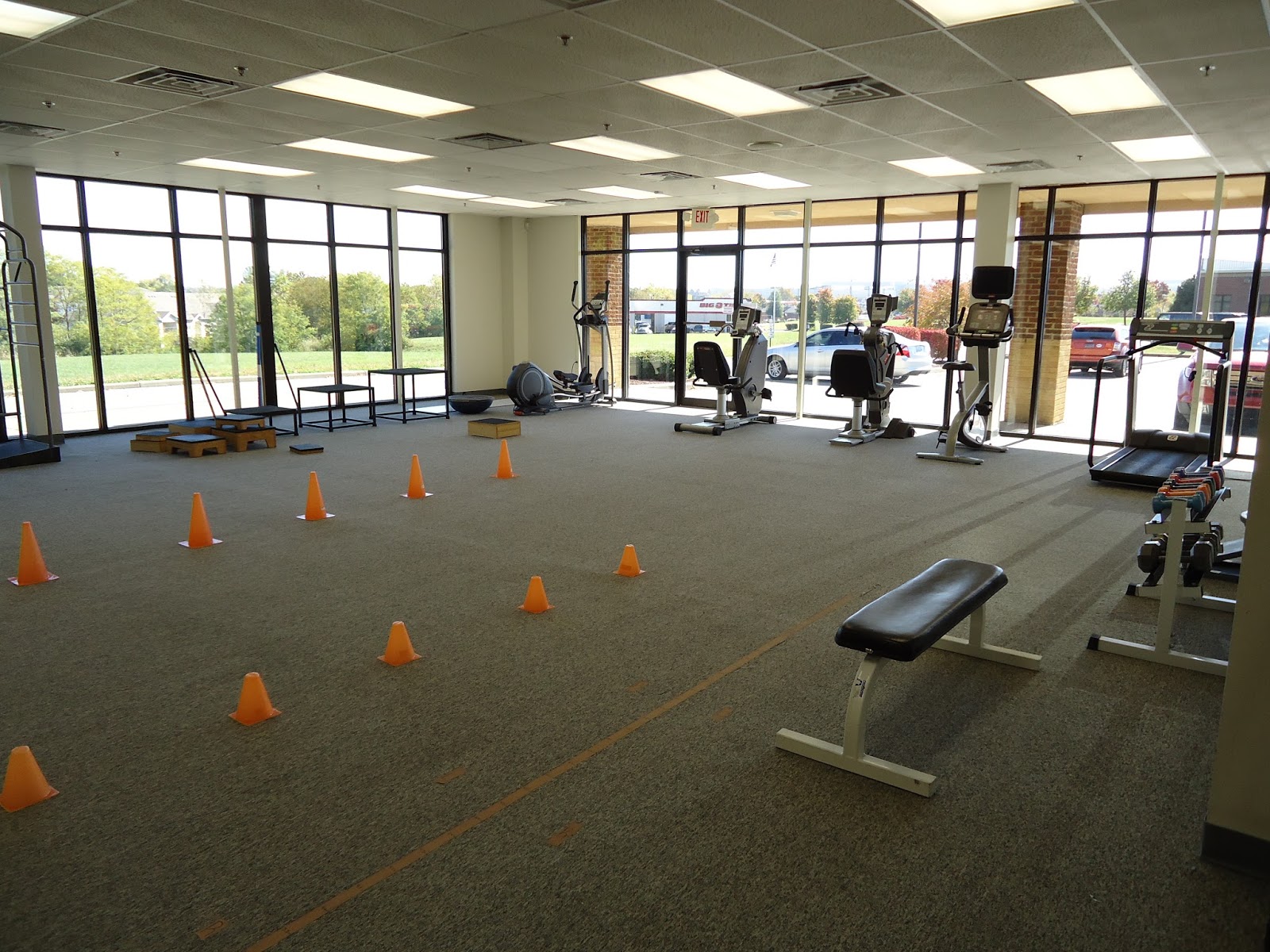


Orthopedic and Sports Physical Therapy, Louisville, KY


Advanced Orthopedic Physical Therapy, Louisville, KY
So finally I
took off to look forth for a wonderful 3 weeks’ vacation (oops), 3 weeks of
enhanced learning experience on 17th Oct from Mumbai to reach
Louisville. Dr. Nyland was extremely gracious to receive me on the airport. My
learning started immediately from the next day and continued for the next 2
weeks. I got a chance to learn and observe eminent physical therapists like Dr.
Bradley Wheeldon and Dr. Alex Kent from specialty clinics like the Orthopedics
and Sports Physical Therapy, Dr. Julie Snowden, Dr. Robin McNeill and Dr. Katie
Elder at the Advanced Orthopedics Physical Therapy and Dr. Janelle Caudill at the
Kentucky Orthopedics Rehabilitation Team clinics. The purpose of the visit was
not only to learn the advances in orthopedics and sports physical therapy but
also to learn the aspects of PT department functioning, administrative
responsibilities and to understand their perspective and rationale of Patient
treatment approach and working on the needs and necessities of the PT
department functioning.


My clinical learning also included 2 days each with Dr. David Caborn who is a Knee and Foot Surgeon at Kentucky One Health Jewish Hospital and with Dr. Ryan Krupp who is a Shoulder surgeon at Norton Brownsboro Hospital. And last but not the least, got to see Dr. John Nyland in action at his Return to Sports clinic at Spalding University as well as assist him in Inter-university Soccer matches for Men and women.


My visit also comprised of giving an interactive lecture to the DPT students at Bellarmine University and to the MSAT students at Spalding University on my favorite topic of ‘Using Suryanamaskar (Sun-Salutation) as a Yogic way for a Community Based Exercise Program – A Physical Therapists Perspective’ which was a chance to represent my Institute, University, Culture and finally my Country and was highly appreciated by the students and the faculties at both the Universities.


Kentucky Orthopedics Rehabilitation Team, Louisville, KY
My clinical learning also included 2 days each with Dr. David Caborn who is a Knee and Foot Surgeon at Kentucky One Health Jewish Hospital and with Dr. Ryan Krupp who is a Shoulder surgeon at Norton Brownsboro Hospital. And last but not the least, got to see Dr. John Nyland in action at his Return to Sports clinic at Spalding University as well as assist him in Inter-university Soccer matches for Men and women.


Dr. Nyland Return to Sports Clinic, Spalding University


Inter-University Soccer Matches
My visit also comprised of giving an interactive lecture to the DPT students at Bellarmine University and to the MSAT students at Spalding University on my favorite topic of ‘Using Suryanamaskar (Sun-Salutation) as a Yogic way for a Community Based Exercise Program – A Physical Therapists Perspective’ which was a chance to represent my Institute, University, Culture and finally my Country and was highly appreciated by the students and the faculties at both the Universities.


Lecture on Suryanamaskar (Sun Salutation)

Practical Demo of Suryanamaskar with students and Faculty of Spalding

With Dr. Patricia Gillette, School of Physical Therapy,
Bellarmine University, Louisville, KY, USA
Many of my
friends and my colleagues have asked me about the different or new things I got
to learn over there. Well, to start with, I would say that Physical Therapy
education in India is in every way equivalent in standards to that in the US.
Infact, our current education system has 4 years of Bachelors and 2-3 years of
Masters Program in Physical Therapy while US has a general bachelors program
and directly a 3 years DPT program. Ofcourse every education system has their
own pros and cons and I definitely am not criticizing any one of it. What I
feel is that we need to make special efforts at individual level to learn the
best of every system. Even in India, we are very active in clinical research
which will help our profession progress and grow. But we all yet need to take
research publications more seriously. One basic learning part would be the
multi-planar motions training, sports specific rehabilitation and the advanced
functional rehabilitation concepts which I learned over there, probably due to
the increased demands of their clients for a faster rehab to meet and match their
active sports specific lifestyle. Also got to learn the utilisation and applicability of some different equipments like the 'Game-ready' and the 'Hivamat' which we typically do not use over here.

Game Ready Cryo Compress Packs

Hivamat Stimulator


But what I really liked and learned over
there is their attitude and positivity. During my visits to the clinics or my
lectures in Bellarmine and Spalding, I had asked Dr. Nyland about what were
their expectations from me. His answer was simple. He just said, “Apurv, I want
you to enjoy there. If you enjoy, people around you will enjoy and only then
will you and others work more productively.” I was in love with this statement
of his. We all are so much used to work under pressures that we know how to
perform, but not how to excel. There, people laugh, play, joke and enjoy in
their work also. This helps in creating a bonding between associates as well as
your start liking what you do. Infact people want to be at work as it is not a
place of stress, but a place to live your life too. (I am sure we know that US
is amongst the most productive country in the world).


Second, have a family life as well. We tend to work for our family and on this pretext get so much busy in that process that we don’t have any time left for our family. The next best thing I learned over there is their support system. Everyone has their own set of tasks and duties. But everyone is always eager and supportive towards their colleagues as well. This helps in building an extremely good team character and also facilitates a positive environment. We Indians are definitely extremely hardworking and intelligent breed of people and have the potential of exceeding in every aspect. I am sure, some change in our behavior and approach will get us far ahead. And it isn’t difficult either. Keeping the roads and our environment clean, following traffic laws and rules, loving and respecting others also is not so difficult.

And most important what I learned is how to value people. Everyone around made me feel extremely special and cared for. Even in the public transport systems, hotel, and especially in the clinics I visited. We say “Atithi Deva Bhava” (Guests are Gods). I experienced it there. Ofcourse, staying away from my family for 3 weeks was painful. But I found another family over there in all the friends that I made. And that is how finally culminated my “Louisville Combined-Service Orthopaedic Surgery and Physiotherapy Fellowship”


Second, have a family life as well. We tend to work for our family and on this pretext get so much busy in that process that we don’t have any time left for our family. The next best thing I learned over there is their support system. Everyone has their own set of tasks and duties. But everyone is always eager and supportive towards their colleagues as well. This helps in building an extremely good team character and also facilitates a positive environment. We Indians are definitely extremely hardworking and intelligent breed of people and have the potential of exceeding in every aspect. I am sure, some change in our behavior and approach will get us far ahead. And it isn’t difficult either. Keeping the roads and our environment clean, following traffic laws and rules, loving and respecting others also is not so difficult.


And most important what I learned is how to value people. Everyone around made me feel extremely special and cared for. Even in the public transport systems, hotel, and especially in the clinics I visited. We say “Atithi Deva Bhava” (Guests are Gods). I experienced it there. Ofcourse, staying away from my family for 3 weeks was painful. But I found another family over there in all the friends that I made. And that is how finally culminated my “Louisville Combined-Service Orthopaedic Surgery and Physiotherapy Fellowship”


